
Birth Chart Houses: The 12 Houses Explained
The 12 houses of a birth chart show where each planet plays out in your life — from money and home to love and career. Here is what every house means.
You have learned your signs. You know your sun, your moon, maybe your rising. But when you look at your actual birth chart — that wheel of symbols and lines — there is a whole other layer you have not touched yet: the houses.
If the planets are the what and the signs are the how, the houses are the where. They are the twelve areas of life where everything actually happens.
What Are the Houses in a Birth Chart?
A birth chart is a circle divided into twelve sections. Those sections are the houses. Each one governs a different area of your life — your identity, your money, your home, your love life, your career, your friendships, and so on.
Here is the key idea: a planet does not just have a sign, it also has a house. If your Venus is in Leo, that tells you how you love — warmly, dramatically, generously. But if that Venus sits in your 10th house, it tells you where that love energy shows up — in your public life and career. Same planet, same sign, completely different life story depending on the house.
The three-layer formula
Planet = what energy it is (Venus = love, Mars = drive). Sign = how that energy expresses (Leo = warm and bold). House = where it plays out (10th = career and reputation). Read all three together and you have a real sentence about your life.
How to Find Your Houses
Your houses are calculated from your exact birth time and place. This is because the house cusps shift as the earth rotates — the whole chart turns roughly one house every two hours. That is why an accurate birth time matters so much for houses.
1. Gather your date, exact time, and city of birth.
2. Open our free birth chart calculator.
3. Look at the inner ring of the chart — the numbers 1 through 12 mark your houses.
4. Note which sign sits on each house cusp, and which planets fall inside each house.
If you do not know your birth time, you can still read your signs, but your houses will be approximate. It is worth tracking down the exact time — it unlocks the entire second half of your chart.
The Four Angles: The Backbone of the Chart
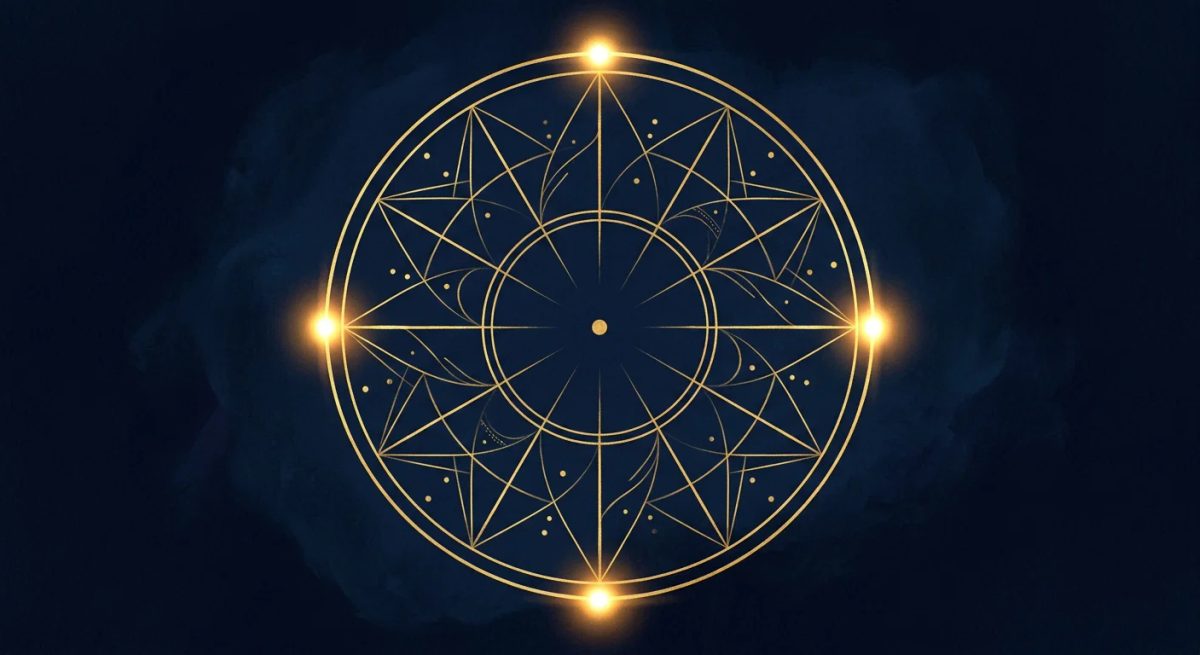
Before the twelve houses, know the four angles — the most sensitive points in any chart:
• 1st house cusp (Ascendant) — your rising sign. How you meet the world.
• 4th house cusp (IC) — your roots, home, and private foundation.
• 7th house cusp (Descendant) — partnership and what you seek in others.
• 10th house cusp (Midheaven) — your career, reputation, and public role.
These four points form the skeleton of the chart. Everything else hangs off them.
The 12 Houses Explained
1st House — Self & Identity
Rules: your body, appearance, first impressions, and how you begin things.
The 1st house is you. It is tied to your rising sign and describes the energy you lead with — the version of you that walks into a room. Planets here are highly visible; they colour your whole personality and how others experience you on first meeting.
2nd House — Money & Values
Rules: income, possessions, self-worth, and what you value.
The 2nd house is about what you own and what you are worth — materially and internally. It governs how you earn, how you spend, and how secure you feel. Planets here shape your relationship with money and your sense of self-value.
3rd House — Communication & Learning
Rules: speech, writing, siblings, short trips, and everyday learning.
The 3rd house is your local world: how you think, talk, and share ideas. It covers siblings, neighbours, and the daily exchange of information. Planets here make you a natural communicator, a curious learner, or a restless mind.
4th House — Home & Roots
Rules: family, home, ancestry, and your private emotional foundation.
The 4th house is where you come from and where you retreat to. It governs your family, your home, and the deep sense of belonging that shapes your security. Planets here tie your identity closely to home and lineage.
5th House — Creativity & Romance
Rules: creativity, play, romance, children, and self-expression.
The 5th house is where you shine for the joy of it. It covers creative projects, love affairs, fun, and children. Planets here bring playfulness, artistic talent, and a love of being delighted — and delighting others.
6th House — Work & Wellness
Rules: daily routines, health, service, and habits.
The 6th house is the everyday machinery of your life: your job, your routines, your body, and how you take care of things. Planets here shape your work ethic, your health patterns, and your need to be useful.
7th House — Partnership & Marriage
Rules: marriage, committed relationships, business partners, and open enemies.
The 7th house is the house of the other. It governs your closest one-to-one relationships and the qualities you seek — or project — in a partner. It sits opposite the 1st house, which is why it is often described as "you, reflected." Planets here make relationships a central theme of your life.
8th House — Transformation & Shared Resources
Rules: intimacy, shared money, death and rebirth, and the occult.
The 8th house is the deep end. It covers intimacy, joint finances, inheritance, and the cycles of ending and renewal. It is intense, private, and transformative. Planets here bring depth, power, and a life shaped by profound change.
9th House — Belief & Expansion
Rules: travel, higher education, philosophy, and faith.
The 9th house is your horizon. It governs long journeys, study, belief systems, and the search for meaning. Planets here make you a seeker — someone who needs to explore, learn, and understand the bigger picture.
10th House — Career & Reputation
Rules: career, ambition, public role, and legacy.
The 10th house is your public summit. It governs your career, your reputation, and what you are known for. It is tied to your Midheaven. Planets here drive ambition and shape your path to recognition.
11th House — Community & Dreams
Rules: friendships, groups, networks, and long-term hopes.
The 11th house is your tribe. It covers friends, communities, social causes, and the future you are working toward. Planets here bring a wide network, a humanitarian streak, and dreams that involve other people.
12th House — The Unconscious & Release
Rules: solitude, dreams, spirituality, hidden things, and letting go.
The 12th house is the last house — the place of endings, retreat, and the inner life. It governs the unconscious, dreams, spirituality, and what you keep hidden or release. Planets here bring a rich inner world, a need for solitude, and a gift for compassion.
HouseArea of lifeRules
1stSelf & identityBody, appearance, first impressions
2ndMoney & valuesIncome, possessions, self-worth
3rdCommunicationSpeech, siblings, short trips, learning
4thHome & rootsFamily, home, ancestry, foundation
5thCreativity & romancePlay, love affairs, children, art
6thWork & wellnessRoutines, health, service, habits
7thPartnershipMarriage, close relationships, the other
8thTransformationIntimacy, shared money, rebirth
9thBelief & expansionTravel, study, philosophy, faith
10thCareer & reputationAmbition, public role, legacy
11thCommunity & dreamsFriends, groups, hopes, networks
12thUnconscious & releaseSolitude, dreams, spirituality, endings
Planets in the Houses
Once you know the houses, the next step is noticing which planets fall in them. A planet in a house turns that area of life up to full volume.
• Sun in the 10th — your identity is tied to your career and public role.
• Moon in the 4th — your emotions are rooted in home and family.
• Venus in the 7th — love and partnership are central to your life.
• Mars in the 1st — you lead with drive, courage, and a strong presence.
We break down each planet's meaning in our guide to the planets in your birth chart.
How to Read Your Own Houses
1. Find your rising sign. It sets the 1st house and the whole structure of the chart.
2. Note the sign on each house cusp. That sign colours how that area of life feels to you.
3. Find which planets sit in which houses. These are your loudest life themes.
4. Look for clusters. If several planets share a house, that area of life is a major focus for you.
5. Start with the angles. The 1st, 4th, 7th, and 10th houses are the most important to understand first.
See your houses free
Enter your birth details and see which sign and planets sit in each of your twelve houses.
Get your houses read for you
A personalised report that interprets your houses, planets, and aspects together.
Free guide: The 2026 Retrograde Survival Guide
When a planet retrogrades, it re-activates the house it sits in — which is why retrogrades feel so personal. Our free guide gives you the full 2026 retrograde calendar, the five rules of surviving one, and sign-by-sign notes for all twelve signs.
Frequently Asked Questions
Keep reading
• The Big Three in Astrology: Sun, Moon & Rising Signs Explained
• Moon Sign Meanings: All 12 Moon Signs Explained
• Sun vs Moon Sign: The Difference and Why Both Matter
• Rising Sign (Ascendant): What It Means and How to Find Yours
Frequently Asked
What are the houses in a birth chart?
The twelve houses are the sections of your birth chart that show where each planet's energy plays out in your life. If the planets are the "what" and the signs are the "how", the houses are the "where" — the areas of life such as money, home, love, and career.
How do I find my birth chart houses?
Your houses are calculated from your exact birth time and place, because the house cusps shift as the earth rotates. Enter your birth details into a free birth chart calculator and it will show which sign sits on each of your twelve houses.
What is the 7th house in astrology?
The 7th house is the house of partnership — marriage, committed relationships, and close one-to-one connections. It also describes the qualities you look for in a partner and what you project onto others. It sits directly opposite the 1st house of self.
What is the 12th house in astrology?
The 12th house is the house of the unconscious, solitude, and release. It governs hidden things, dreams, spirituality, and what you keep private or let go of. It is the last house, associated with endings, closure, and the inner life.
Which house is the most important in a birth chart?
The 1st house is often considered the most important because it sets the structure of the whole chart and is tied to your rising sign. But the most important house for you personally is the one holding the most planets, or the one ruling the area of life you are focused on.
Do the houses change over time?
Your natal houses are fixed at birth and never change. What changes is which planets are currently moving through them — that is what transits and forecasts track. Your birth chart houses stay the same for life.
About this topic
12 houses astrology meaning (3,600/mo)